
| Location | Budapest IX. |
| Function | kindergarten |
| Floor area | 950 m² |
| Organizer | Budapest Capital City IX. District Ferencváros Municipality |
| Year of design | 2025 |
| Status | design competition |
| Lead designer | TH-Stúdió |
| Architects | György Hidasi, Attila Gombos, Ágoston Drippey, Cecília Tóth, Eszter Polai, Attila Gombos, Gabriella Lipkovics-György |
During the design process of the Hársfa Kindergarten in Budapest’s 9th district, our goal was to create a space that not only serves children’s needs but also contributes to their development - providing a sense of safety, inspiration, and community. At this stage of life, children are discovering the world, testing their independence, and building social connections. Architecture’s role is to support this growth by creating environments that are safe, inviting to explore, and conducive to community building.
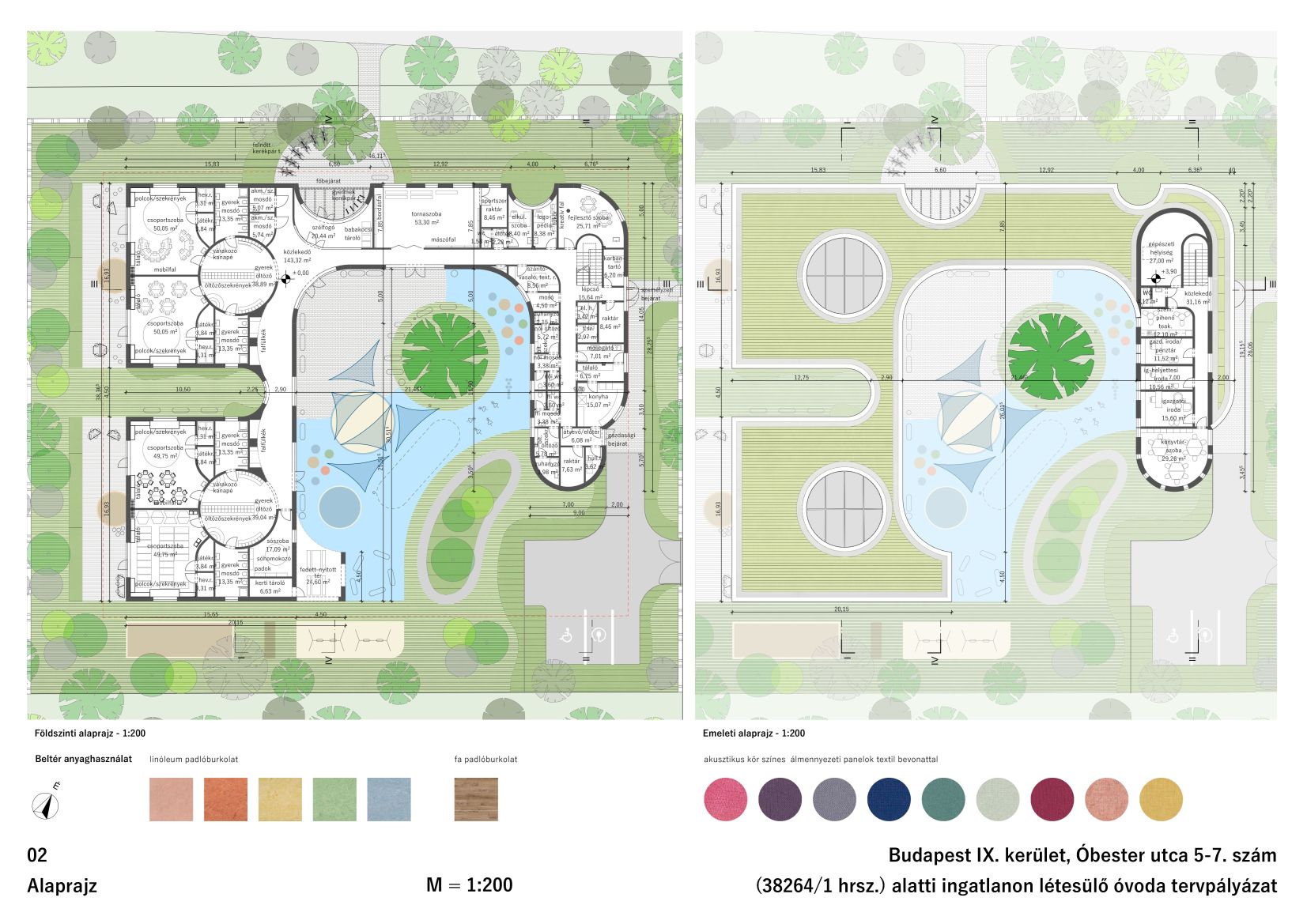
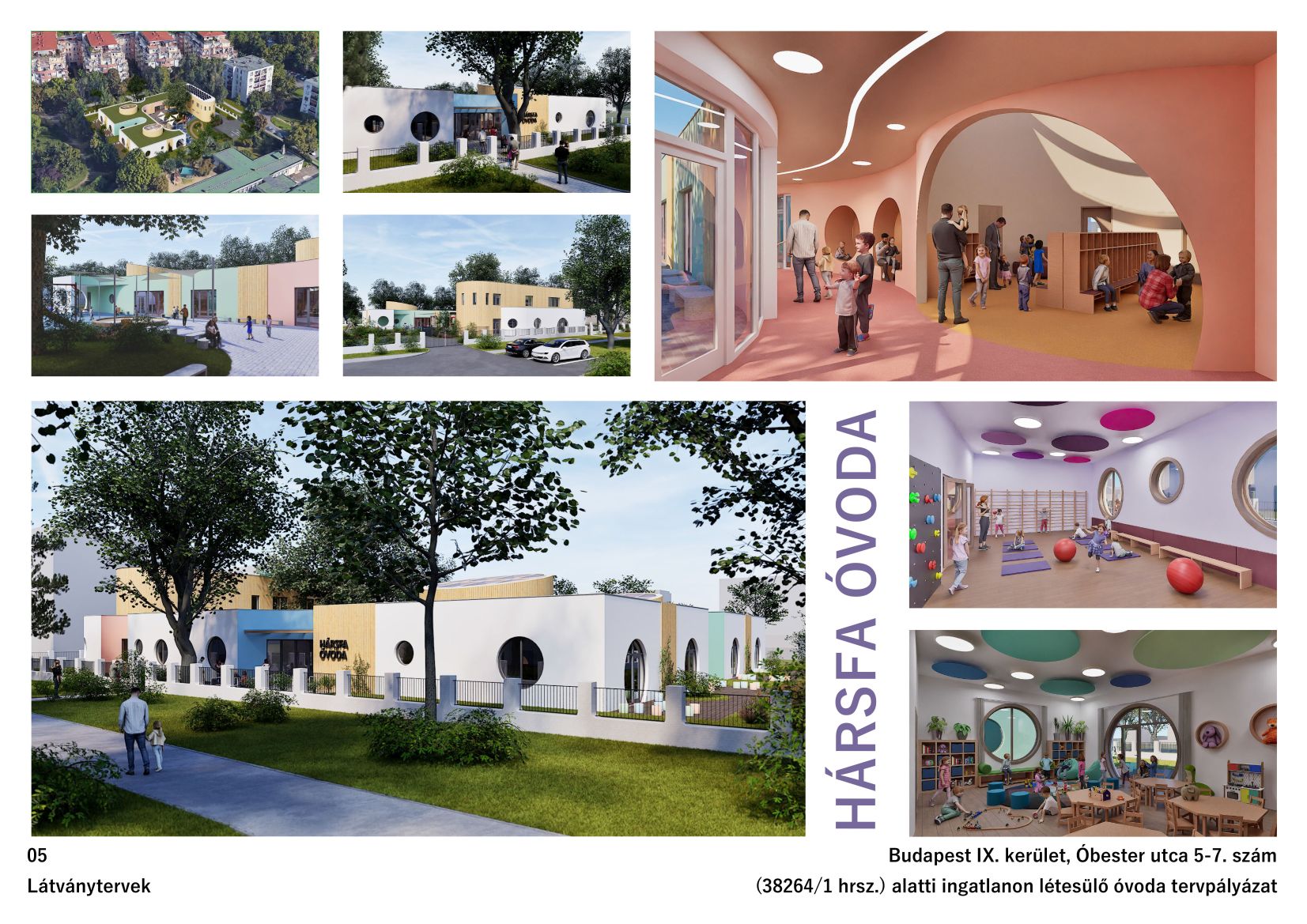
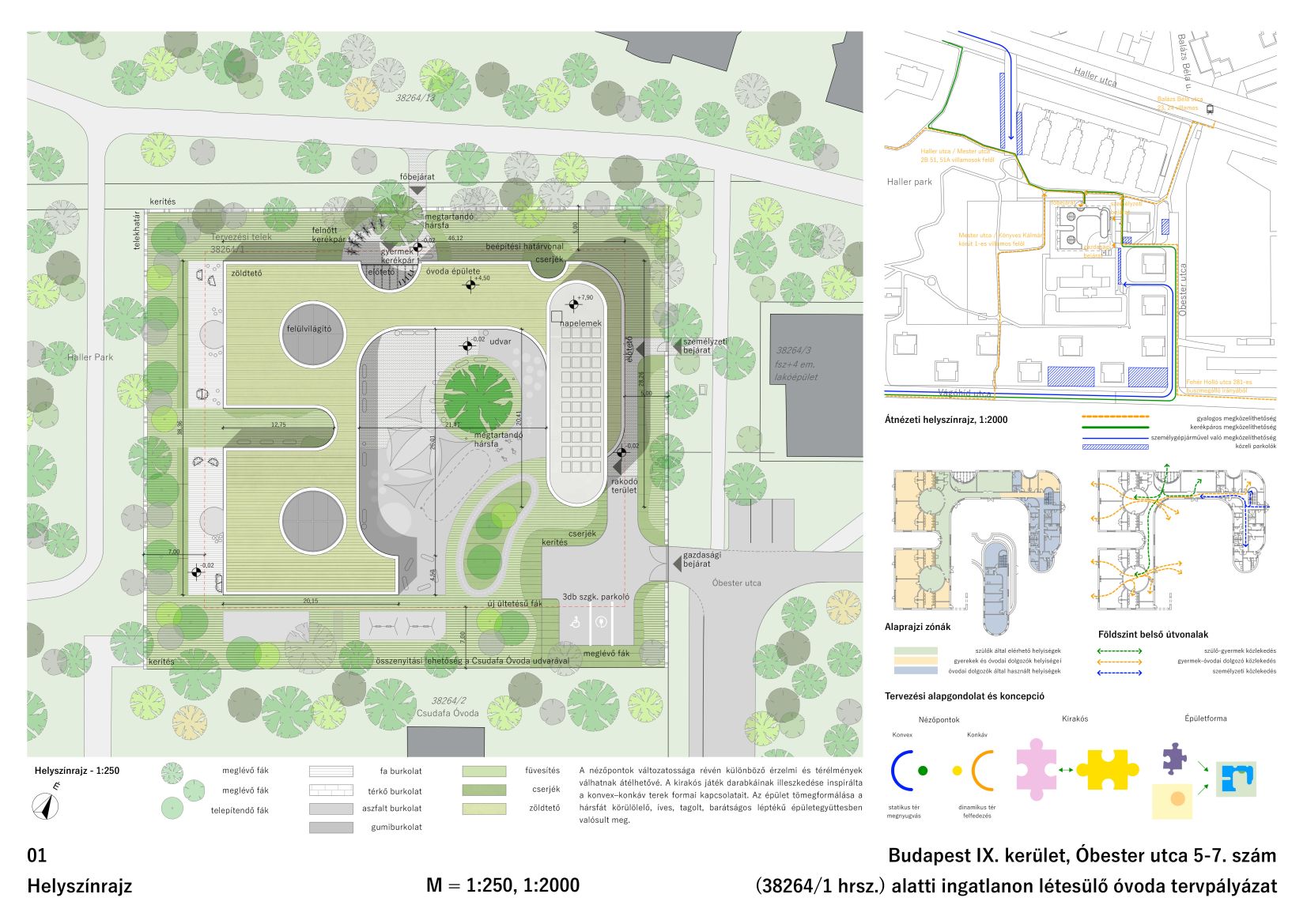
The building’s form was inspired by the alternation of convex and concave spaces, the “puzzle-like” compositional principle, and the majestic linden tree (hársfa) standing at the center of the site. The resulting “C”-shaped layout embraces the inner courtyard, which serves as the heart of daily kindergarten life. The diversity of interior and exterior spaces allows children both to withdraw and to engage in communal activities. Cozy corners and small alcoves foster emotional security, while generous common areas encourage movement and cooperation. The harmonious use of colors, natural light, and materials creates a calm, homelike atmosphere.
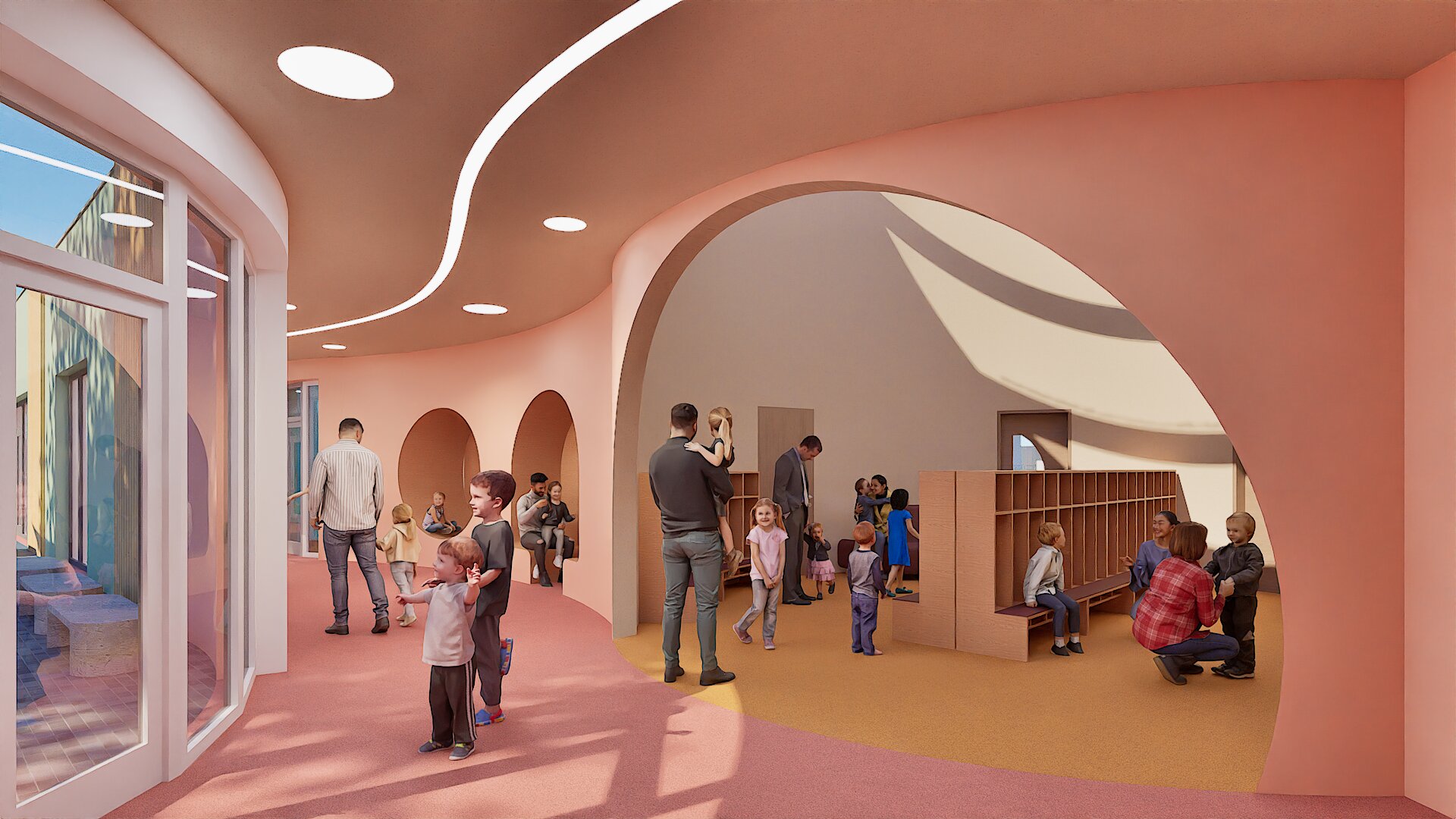
All daily activities take place on the ground floor - the group rooms, playground, and gym are located on one level to ensure an accessible and easily supervised environment. The central corridor and transparent spatial organization facilitate both orientation and teachers’ oversight, allowing children to explore their surroundings safely. The spatial sequence also supports the sensitive process of separation between parent and child: the soft, curved forms and natural light help ease the transition into the kindergarten day. The goal is for separation from home and parent not to feel like a sudden leap, but rather a smooth, everyday process.
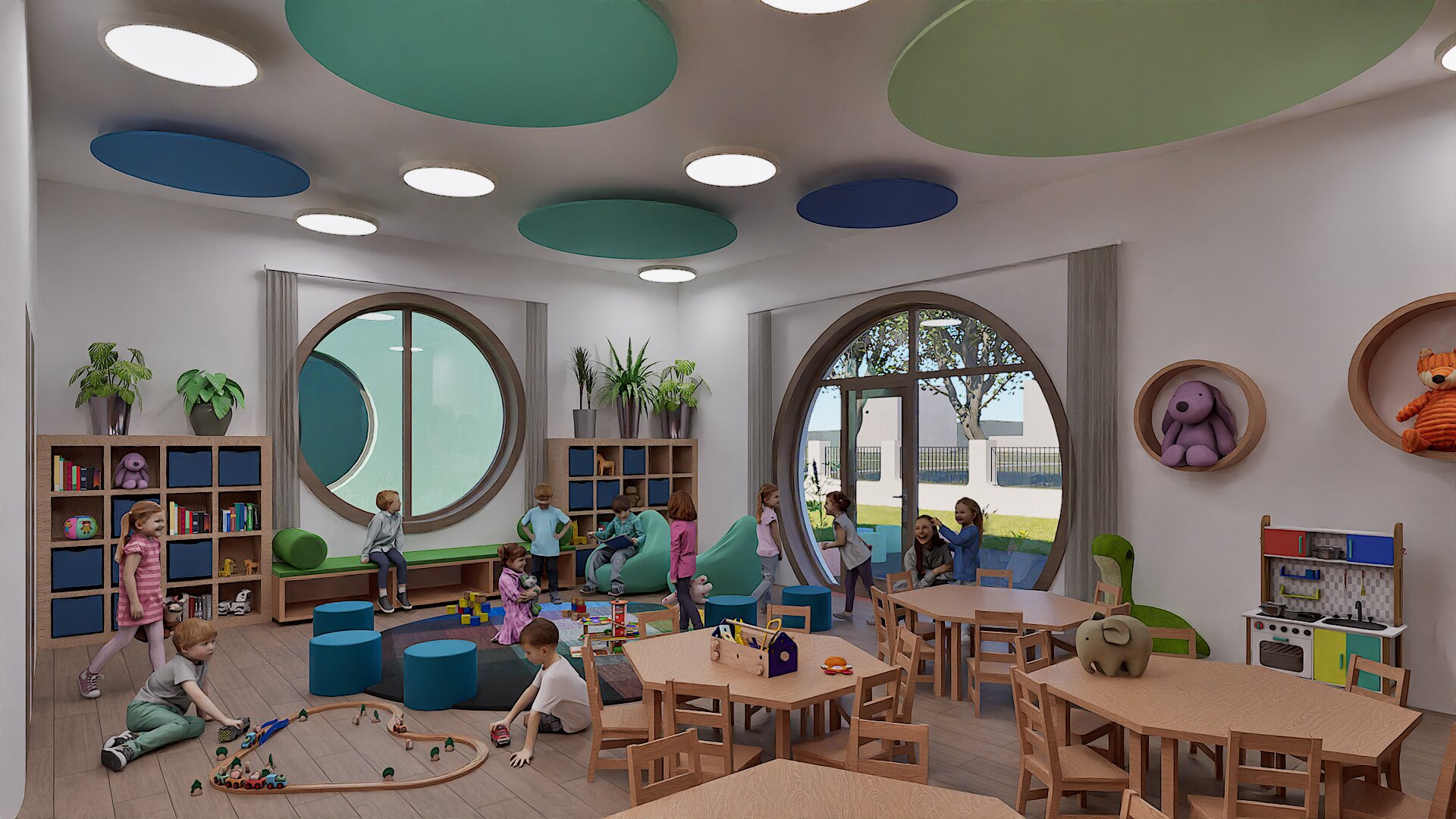
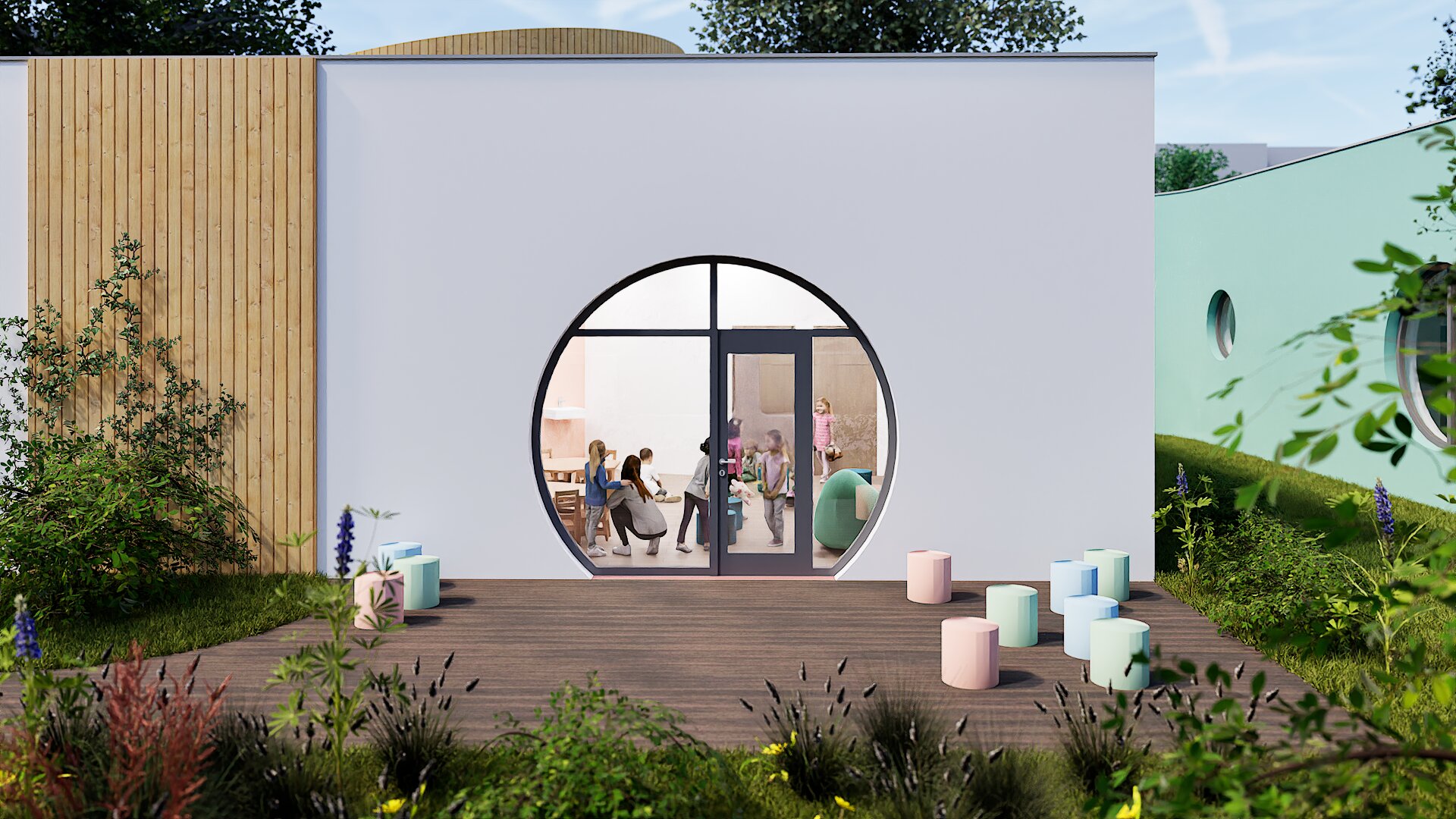
Through the glass wall of the entrance vestibule, the forecourts of the group rooms and the garden are already visible. Along the corridor to the right are two circular changing rooms, from which the children’s washrooms and group rooms open. These volumes extend from the main building mass and are topped with wooden ribbed glass roofs. From the southwest-facing group rooms, storage areas for toys and beds are accessible. Each pair of group rooms can be opened into one another with movable partitions. Every group room has its own exit to the garden, separate from the central playground. Between the two cloakrooms, recessed wall niches along the corridor provide a place for children who find separation difficult, helping them adjust more easily. At the end of the main corridor is the salt room.
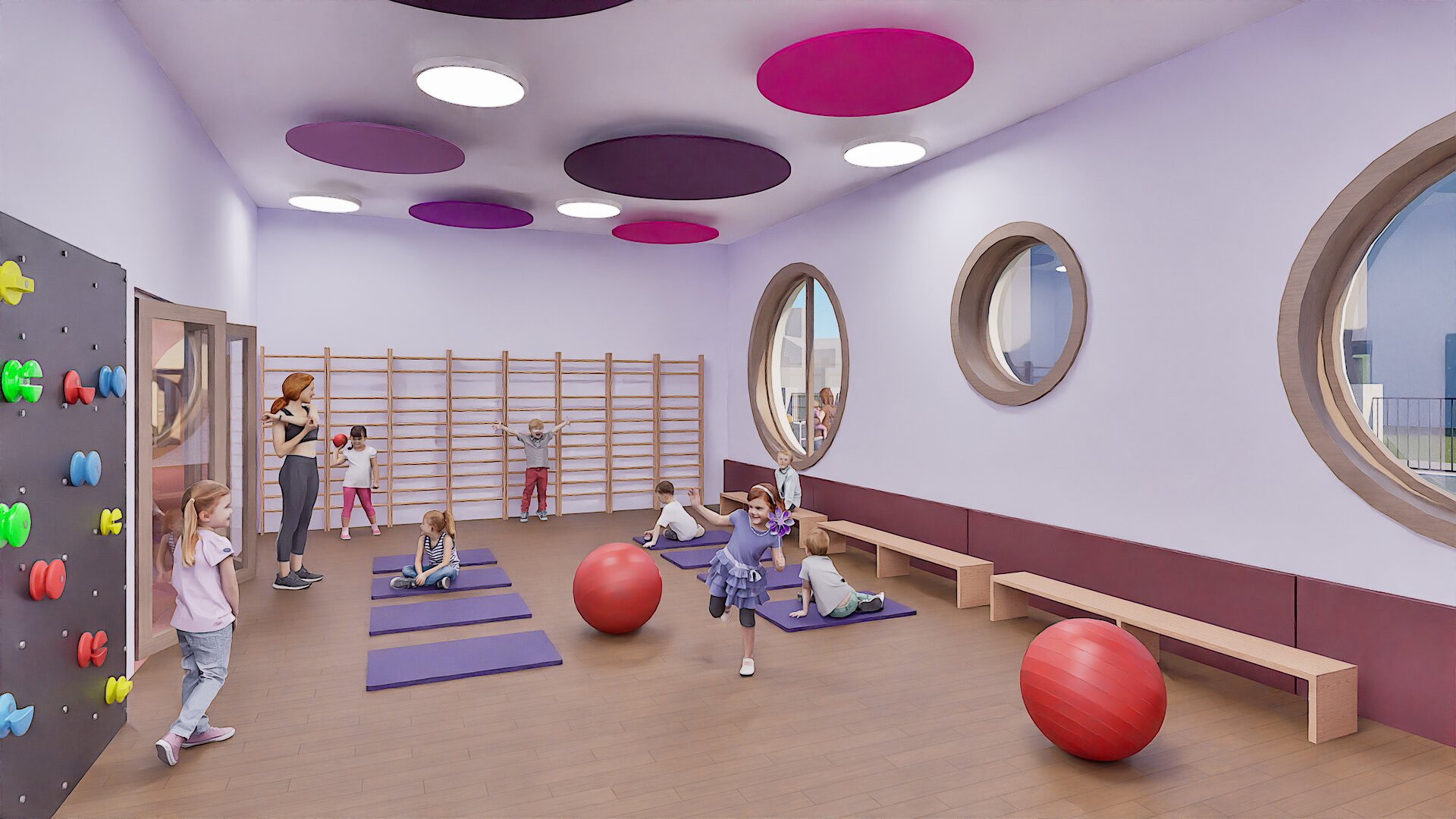
From the entrance vestibule, the gym is located to the left along the corridor, close to the group rooms. Beyond this are the isolation room, speech therapy, and development rooms - spaces used by the children as part of their daily routine. The staff staircase leads to the upper floor, which houses administrative offices and teachers’ rooms. At the end of the central corridor is the kitchen delivery area, connected to the service yard. Staff can access the building through the northeast entrance.
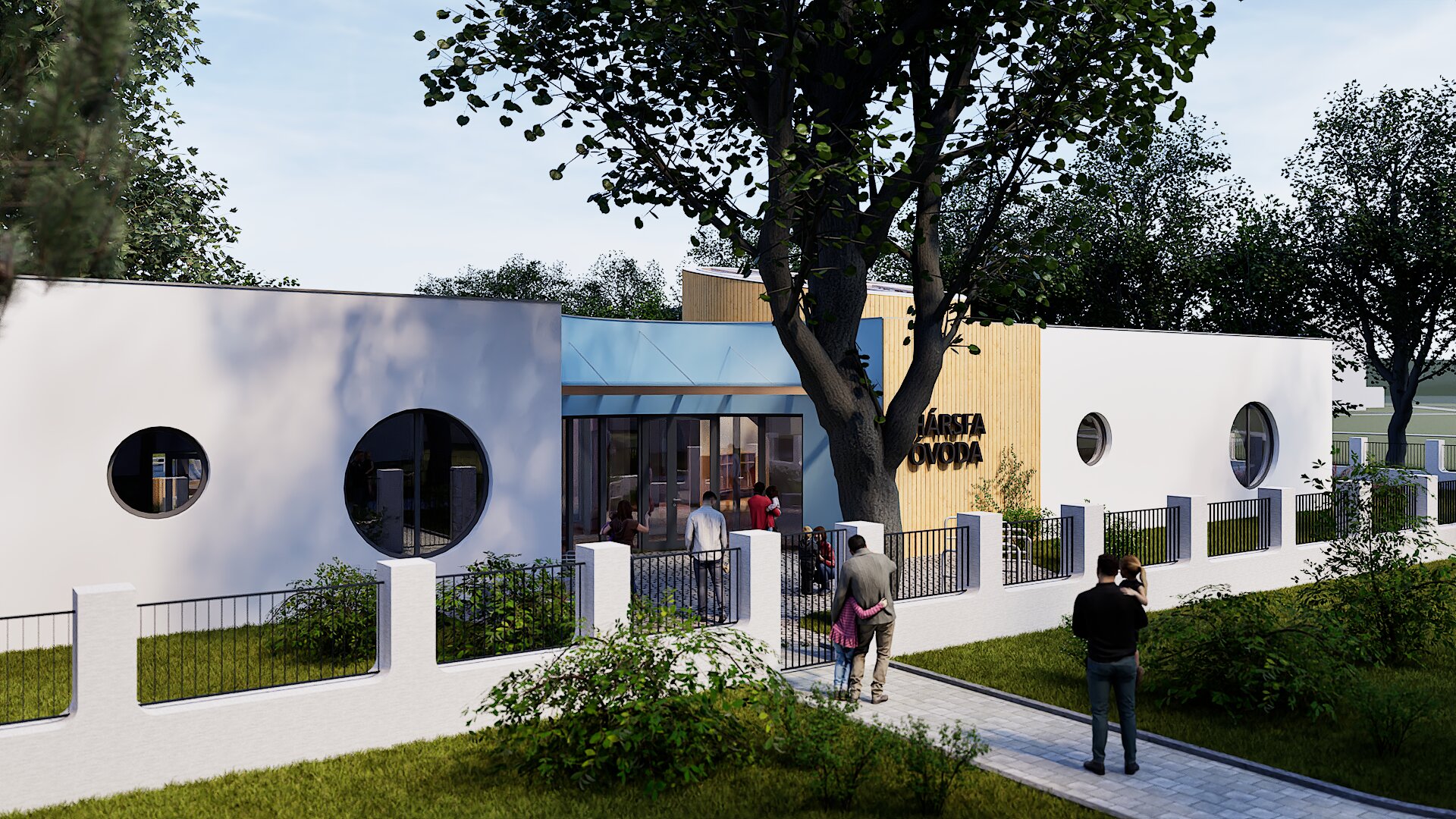
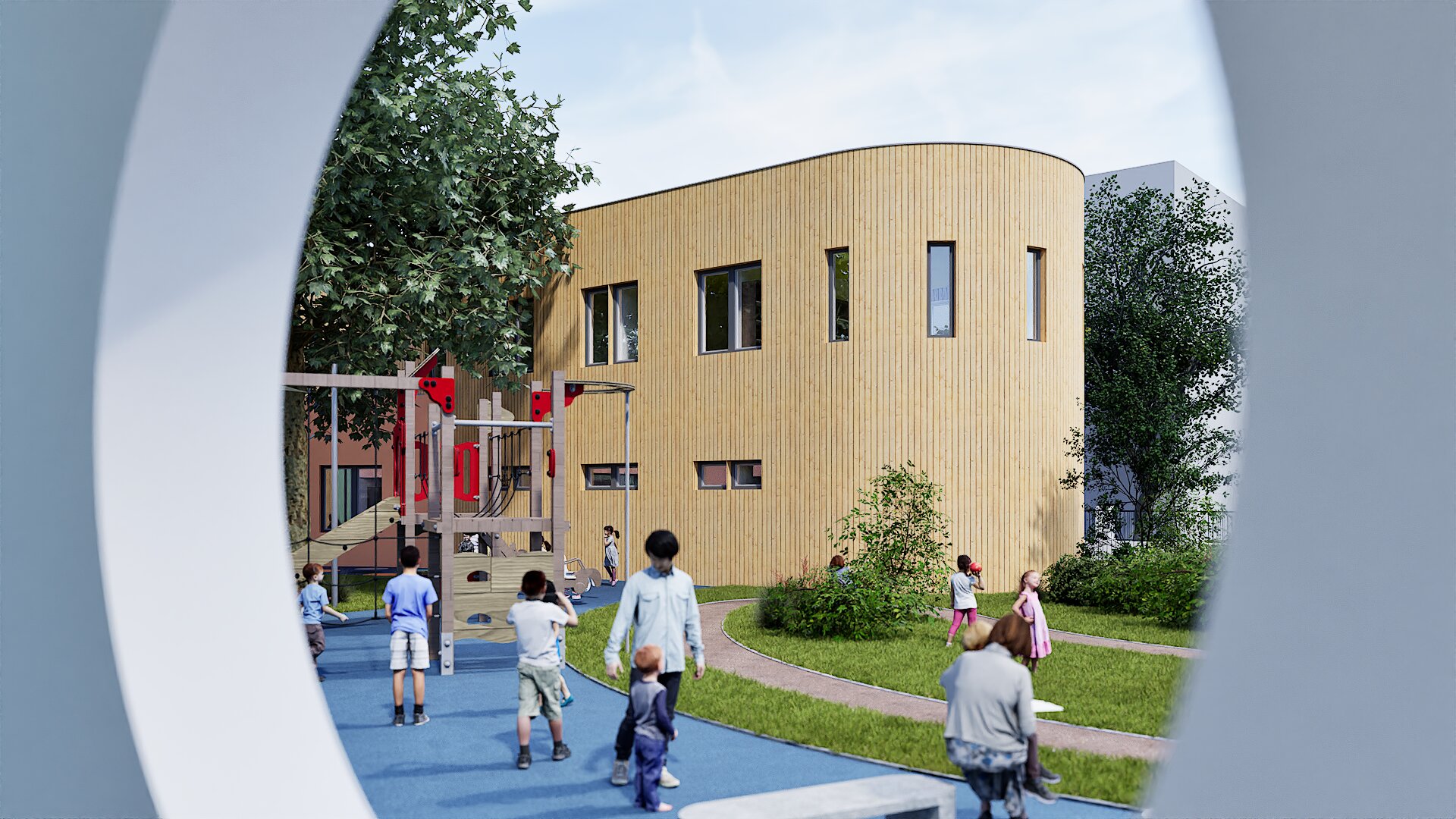
The two-story, articulated building mass is softened by rounded corners, “cut-outs,” and pastel-colored surfaces. Wooden cladding and climbing greenery on the façade bring warmth and a sense of life to the architecture. Large glass surfaces establish a visual connection with the courtyard, while the abundance of natural light creates a supportive and inspiring atmosphere.
The kindergarten aims to be an emotionally safe, exploratory, and community-building space - a place where children can grow freely, connect with one another and their environment, and where the space itself educates, protects, and inspires.